Pelvic Floor Exercises: Guided Plan or Going It Alone at Home
By:Author:DoKegel Editorial
Updated on:October 16, 2026

- Finding and Training the Muscle Step by Step
- How Often Pelvic Floor Exercises Should Happen
- Where Pelvic Floor Exercises Actually Happen in a Day
- A Four-Stage Starting Point for Pelvic Floor Training
- When Pelvic Floor Training Starts to Feel Routine
- Mistakes That Quietly Stall Pelvic Floor Progress
- Turning Pelvic Floor Exercises Into a Guided Routine With DoKegel
- Choosing Your Approach to Pelvic Floor Training
Pelvic floor exercises work by repeatedly contracting and releasing the muscles that support your bladder and bowel and play a part in sexual function - the same way any other muscle group responds to repeated load.
Most people were never taught where this muscle is or how to find it, so the exercise itself feels vague even when the idea sounds simple. That's normal, and it's fixable with a bit of structure.
This guide covers the actual steps, how much is reasonable, a starting plan, where people tend to quit, and whether a guided plan beats working it out alone.
Finding and Training the Muscle Step by Step
Before counting reps, it helps to know exactly which muscle you're moving and what a clean contraction feels like.
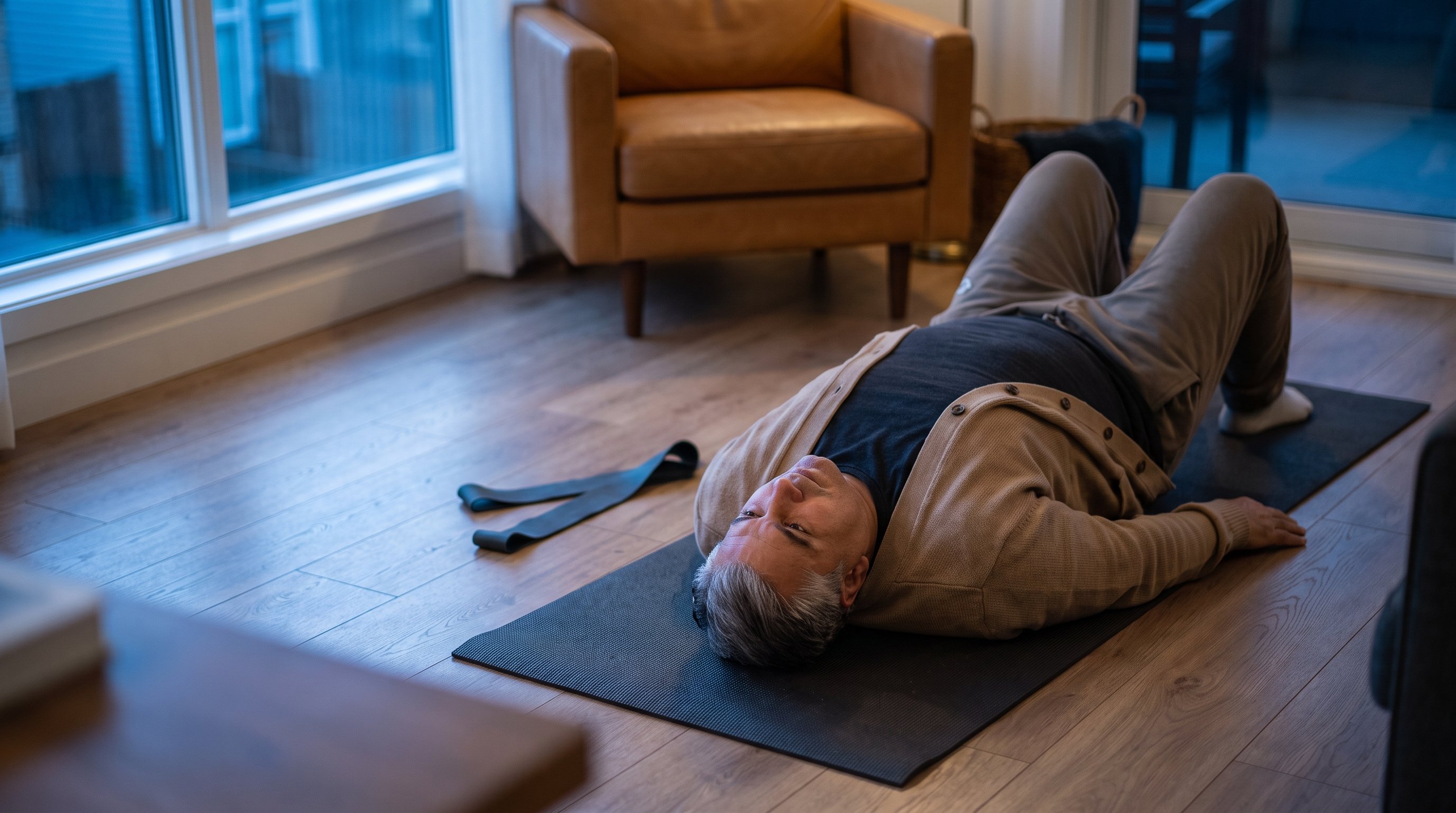
A Simple Way to Start
- Identify the muscle - try stopping your urine stream midway once, just to feel which muscle does the work. Don't make this a regular habit, it's only for identification.
- Get into a comfortable position - sitting or lying down works better than standing when you're still learning the movement.
- Contract gently - squeeze and lift the muscle without tightening your stomach, thighs or buttocks.
- Hold briefly - hold the contraction for a few seconds, then release fully for the same count.
- Breathe normally throughout - holding your breath usually means you're tensing other muscles instead.
- Repeat for a short set - a handful of repetitions is enough while you're learning the motion.
- Rest between sets - give the muscle a proper break rather than stacking sets back to back.
Once the contraction feels distinct and repeatable, the exercise itself barely changes - you're just doing it more consistently.
How Often Pelvic Floor Exercises Should Happen
Frequency Over Intensity
This isn't a muscle that benefits from one exhausting session a week. Short, frequent sets spread across the day tend to suit it better than one long grind.

The table below gives a rough frame for how to structure sets across a day without needing any equipment or a set location.
| Approach | When | Effort Level |
|---|---|---|
| A few short sets | Morning, midday, evening | Low, easy to repeat |
| One longer session | Once daily | Moderate, needs focus |
| Scattered single reps | Throughout the day | Minimal, easy to forget |
| Guided audio session | Set time slot | Low, structured for you |
Where Pelvic Floor Exercises Actually Happen in a Day
Nobody has a spare 20 minutes reserved for pelvic floor work, and that's fine because this exercise doesn't need one. You can do a set while waiting for a kettle to boil, sitting in traffic, or at a desk between tasks.
The difficulty isn't finding time, it's remembering to do it at all once the novelty wears off.
This is where a guided plan earns its keep - DoKegel uses short, timed audio and video sessions so you're following a cue instead of trying to remember on your own, alongside habit trackers that keep the routine visible day to day.
Having something prompt you removes the guesswork of whether you're doing enough or doing it right.
A Four-Stage Starting Point for Pelvic Floor Training
The order below matters more than the exact numbers - it moves from finding the muscle to building consistency before adding any volume.
| Stage | Focus | Goal |
|---|---|---|
| Stage 1 | Find the contraction | Feel the correct muscle clearly |
| Stage 2 | Build a short daily set | Do it at the same time each day |
| Stage 3 | Add a second daily set | Spread sets across morning and evening |
| Stage 4 | Hold the pattern steady | Make it automatic, not effortful |
When Pelvic Floor Training Starts to Feel Routine
Here is the good news nobody leads with: the exercise itself gets easier to remember before it gets easier to feel.
Early on, a lot of people quit around the point where the novelty fades and nothing feels dramatically different yet. That's not a sign it isn't working, it's just the unglamorous middle part of building any habit.
Consistency is unglamorous and it wins anyway - sticking with short sessions across weeks matters more than how hard any single session feels.
If you ever notice pain, worsening symptoms or anything that feels wrong rather than just unfamiliar, speak to a clinician before continuing.
Mistakes That Quietly Stall Pelvic Floor Progress
Squeezing Everything, Not Just the Target Muscle.
Tightening your stomach, thighs or buttocks along with the pelvic floor dilutes the effort. Slow down and isolate the contraction until it feels distinct from everything around it.
Holding Your Breath During the Contraction.
This usually signals you're bracing instead of isolating the muscle. Breathe normally through each rep so the contraction stays targeted.
Doing One Long Session and Calling It Done.
A single intense set doesn't make up for skipped days. Short, frequent sets spread across the week tend to add up to more consistent practice.
Expecting a Fast, Dramatic Shift.
There's no overnight switch to flip here - progress with this kind of training tends to show up gradually, not in a single week.
Forgetting Entirely After the First Few Days.
Without a prompt or a tracker, this exercise is easy to drop. Linking it to an existing daily habit, or using a guided reminder, keeps it from disappearing.
Turning Pelvic Floor Exercises Into a Guided Routine With DoKegel
Going it alone works if you can stay consistent without any outside structure, but most people find that harder than it sounds once the first week ends.
DoKegel builds a tailored exercise plan around guided Kegel sessions, so each one tells you when to contract and when to release instead of leaving you to count silently.
It also includes habit trackers for routines like hydration, lifestyle challenges to nudge small daily changes, and a specialist-curated article library to keep you informed as you go.
None of this needs a gym membership, special equipment or a restrictive diet - just a few short sessions fitted into a day you already have.

Build Stamina Naturally
Train Where It Counts
Choosing Your Approach to Pelvic Floor Training
Whether you go it alone or follow a guided plan, the actual exercise doesn't change - what changes is how likely you are to keep doing it past the first couple of weeks.
Pick a starting point from the stages above, do a short set today, and let DoKegel handle the reminders and structure if remembering on your own hasn't worked so far.
FAQ
There's no fixed timeline, and it varies from person to person depending on consistency. What matters more than speed is sticking with short, regular sessions rather than chasing a quick result.
Yes - the most common issue is tensing the stomach, thighs or buttocks instead of isolating the pelvic floor. Slowing down and breathing normally through each rep usually fixes it.
This is the most common reason people drop the habit, not lack of effort. A guided app like DoKegel, with timed sessions and daily trackers, removes the need to remember on your own.
No equipment, gym membership or special setup is needed for this kind of training. A quiet moment and a few minutes anywhere in your day is enough to begin.
Share this post