How to Stay Motivated to Exercise: What Actually Keeps You Going
By:Author:DoKegel Editorial
Updated on:October 16, 2026
- Can You Actually Train Yourself to Want to Exercise?
- Short Daily Habit or Long Weekly Session: Weighing the Choice
- Why Small and Frequent Beats Occasional and Intense
- Matching the Routine to Where You Actually Are
- Making Movement Fit Around a Full Day
- No, Motivation Doesn't Just Show Up One Day
- Finding Routines That Don't Depend on Willpower With DoKegel
- Building a Habit You Don't Have to Talk Yourself Into
Motivation to exercise doesn't come from hyping yourself up. It comes from lowering the effort it takes to start, so you don't need much motivation at all.
Willpower is a limited resource that runs low by the end of a long day, which is exactly when most people plan to work out. Build a routine that asks less of you on tired days and the whole thing gets easier to sustain.
This guide covers what actually drives long-term consistency, the honest arithmetic behind small daily habits, how the easier route compares to grinding through a harder plan, and how to fit movement into a life that's already full.
Can You Actually Train Yourself to Want to Exercise?
You can't manufacture desire on demand, but you can build a pattern that doesn't require it. Habits form through repetition in a consistent context - same time, same trigger, same small action - until the behaviour needs less conscious decision-making each time.
Here's the arithmetic nobody does out loud. A ten-minute session, four times a week, is forty minutes of movement.
Compare that to one planned sixty-minute gym trip that gets skipped half the time because it needs a bag, a drive, and a clear hour. Four skipped weeks of the long version is zero minutes; four completed weeks of the short version is still one hundred and sixty minutes banked.
The muscle memory isn't magic, it's repetition lowering the activation energy. Fewer decisions to make before you start means fewer chances to talk yourself out of it.
Short Daily Habit or Long Weekly Session: Weighing the Choice
Most people default to planning one or two long sessions a week because that's what a traditional gym routine looks like. The trouble is that a long session has more points of failure - time, location, energy, mood - than a short one.

| Factor | Short Daily Habit | Long Weekly Session |
|---|---|---|
| Time needed | 5-15 minutes | 45-75 minutes |
| Planning required | Minimal, fits anywhere | Travel and scheduling |
| Chance of skipping | Lower, low barrier | Higher on busy days |
| Weekly total if consistent | Adds up steadily | Depends on attendance |
| Recovery needed | Little to none | Often a rest day after |
Neither option is wrong, and plenty of people do both. The point is that the short daily habit survives bad weeks better, because missing one short session costs you almost nothing, while missing one long session costs you the whole week's movement.
Why Small and Frequent Beats Occasional and Intense
The harder alternative - an intense, infrequent workout plan - asks a lot of you right when your motivation is lowest. It needs a big block of free time, a reserve of energy, and the right mood, all showing up at once.
Small and frequent sidesteps that problem by asking almost nothing of you each time.
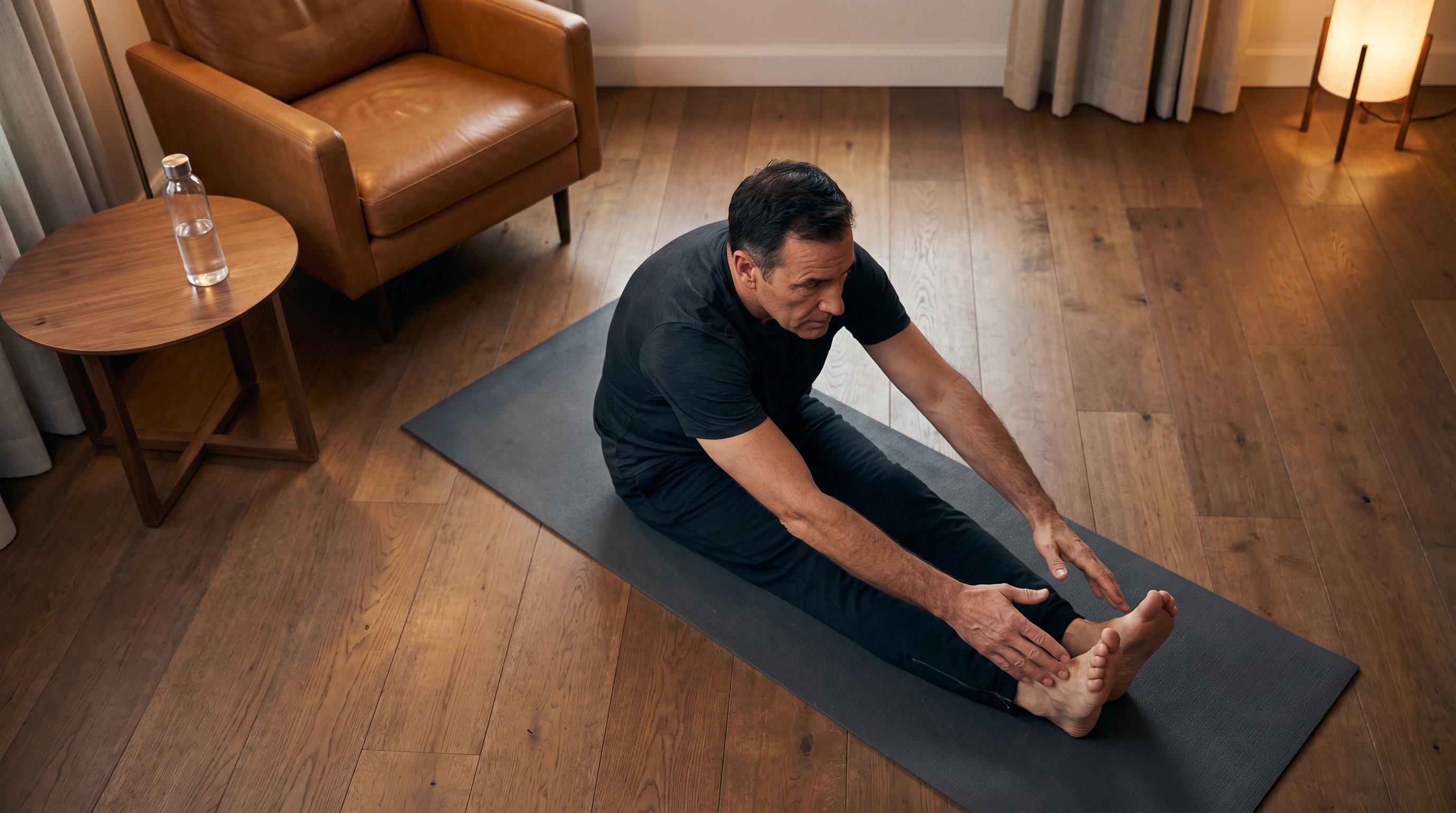
Adherence is the whole game. A routine you actually do most days beats a routine you admire but skip, every single time, because consistency is what turns a plan into a result.
This is why habit trackers, streaks, and short guided routines tend to outperform ambitious plans that never survive contact with a tired Tuesday. Lowering the bar isn't giving up - it's removing the excuse.
Matching the Routine to Where You Actually Are
If You're Just Starting Out
Pick one small action you can do daily without much thought - a short walk, a few minutes of stretching, a quick guided routine. Consistency over the first few weeks matters more than intensity.
If Your Schedule Is Packed
Look for anything that fits into a gap you already have, like waiting for the kettle or sitting at a desk. Short sessions you can do without changing clothes remove the biggest excuse - no time to prep.
If You're Getting Back Into It After a Break
Start smaller than feels necessary. Rebuilding a habit works better from a low, repeatable baseline than from trying to pick up where an old routine left off.
If You've Tried and Stopped Before
The issue usually wasn't effort, it was a plan that needed too much from you on an average day. Shrink the daily ask and the habit has a better chance of actually sticking this time.
Making Movement Fit Around a Full Day
Real life doesn't leave neat gaps for exercise, so the habit has to bend to fit around work, family, and everything else on the list. That usually means shrinking the session rather than waiting for a free hour that never arrives.
Keeping track of small daily habits - hydration, short routines, a few minutes of focused exercise - helps you notice patterns without needing to overhaul your whole day.
This is where an app like DoKegel fits in for people focused on sexual wellness specifically: short guided Kegel sessions, daily trackers for hydration and wellness routines, and small lifestyle challenges that slot into a day you already have, rather than asking you to build a new one around them.
No, Motivation Doesn't Just Show Up One Day
There's a popular idea that one day you'll simply feel like exercising and it'll click into place forever. That's not how it tends to go.
Motivation comes and goes regardless of how consistent you are - it's not a switch you flip once and leave on. What actually holds things together is structure: small habits, visible progress, and a routine low-effort enough to survive the days motivation doesn't turn up.
The honest answer is that you don't wait to feel motivated, you build a routine small enough that feeling motivated stops being a requirement.
Finding Routines That Don't Depend on Willpower With DoKegel
If the goal is a habit that survives busy weeks and low-motivation days, the structure matters more than the intensity. DoKegel is built around that idea for sexual wellness specifically: hundreds of short, guided Kegel sessions designed to fit into a few spare minutes rather than a free hour.
Daily trackers for hydration and wellness routines give you something concrete to check off, which helps the habit stay visible instead of fading into the background.
Hand-selected lifestyle challenges, a specialist-curated article library, and audio and video content you can use on your own schedule round out a routine built to need as little willpower as possible, day to day.
Build Stamina Naturally
Train Where It Counts
Building a Habit You Don't Have to Talk Yourself Into
Staying active for the long run isn't about finding more willpower, it's about needing less of it. Pick one small action, attach it to something you already do daily, and let repetition do the heavy lifting.
If sexual wellness is part of what you're working on, DoKegel's short guided sessions and daily trackers are built to fit into a routine you can actually keep, starting today.
FAQ
There's no fixed point where motivation suddenly arrives and stays. Most people find the habit gets easier to repeat well before they feel strongly motivated about it, simply because repetition lowers the effort each time.
A short session done consistently adds up to more total movement than a long session that keeps getting skipped. Forty minutes a week from four ten-minute sessions still counts, and it's more reliable than a single long workout you only manage some weeks.
Usually it's a routine that asks for too much time, energy, or planning on an average day. Shrinking the daily ask - a shorter session, a simpler trigger - removes most of the friction that causes people to quit.
Often the plan was built around motivation rather than structure, so once the initial enthusiasm faded there was nothing holding the habit up. Tools like DoKegel's trackers and short guided sessions are built to keep a routine visible and low-effort, so it doesn't rely on motivation to continue.
Share this post